

Making a Mark
On Modernism, markets, and another kind of craftsmanship

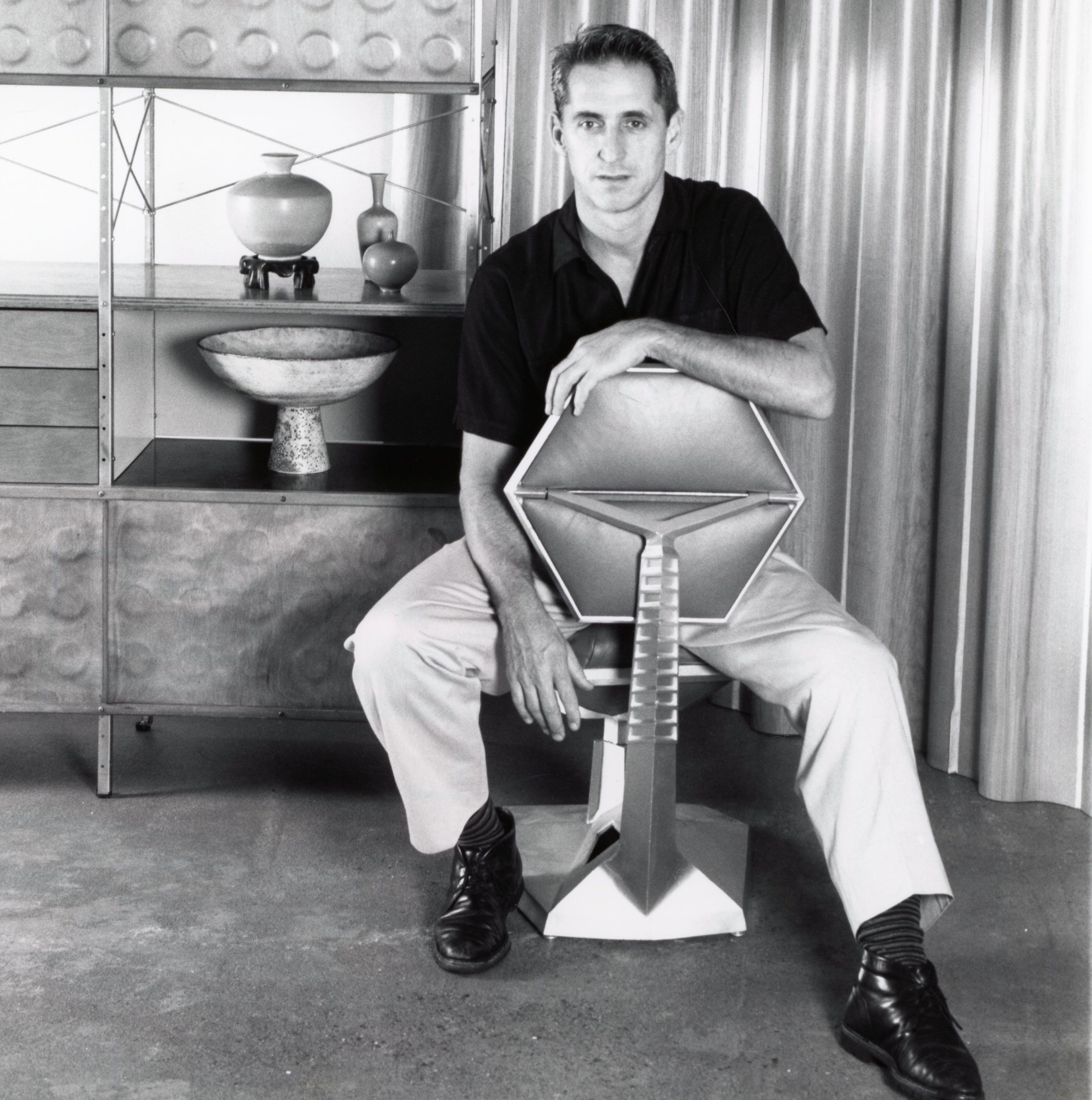
“What’s your favorite object?”
Here’s what I expected to hear. A George Nakashima table, perhaps. A rare Eames prototype. Something Gio Ponti.
Instead, what I get from Mark McDonald: an Ice Gun.
Actually a 1950s ice crusher shaped as a ray gun. Made by Opco of Los Angeles, designer unknown. Moderne, manufactured, reveling in its Buck Rogers kitschness. Also functional. Pull back the spring-loaded plunger, pop in some ice, release: crushed ice for your favorite tipple.
Not quite what I expected from the man the New York Times dubbed Mr. Modernism. Though probably I should’ve.
Something out of (almost) nothing
For those outside the New York design world of the last half century, Mark—along with partners Mark Isaacson and Ralph Cutler—made “mid-century modern” a thing. The thing, in fact. Their legendary gallery, Fifty/50, (1981-1993) was where it happened. Without that triumvirate, the ‘90s and ‘00s wouldn’t have looked the way they did. Dwell and Wallpaper wouldn’t exist. Nor would Design Within Reach.
But rewind to the early ‘80s, when Fifty/50 opened. Your design choices, if you had money: antiques, French Art Deco, or if you were feeling terribly brave, Italian Postmodern with its in-your-face movements like Memphis.
In fact, by the 1980s, as design writer Karrie Jacobs pointed out, design critics and writers considered Modernism distinctly unmodern.
The critics’ darling—irony-loving Postmodernism—was arty, arch, knowing, individualistic, anything goes. Compare to Modernism: optimistic, proscriptively world-building in its insistence on simplicity, efficiency, rationalization, and at heart—deeply democratic. Earnest, even. Not unlike Patsy versus Saffy in AbFab, perhaps.
Into this aesthetic gallimaufry strode Mark and his partners, daring to champion that very unmodern Modernist movement.
There was a problem, though, beyond trends, taste, and pesky design critics. Work from the 1930s through the 1960s was barely vintage. Your parents’ stuff, much of it “mass”-manufactured. Did it have value? How could any of it be collectible? What was the point of getting serious about something so accessible?
Put crassly: could one actually build a market for this kind of work? Because that’s what it needed.
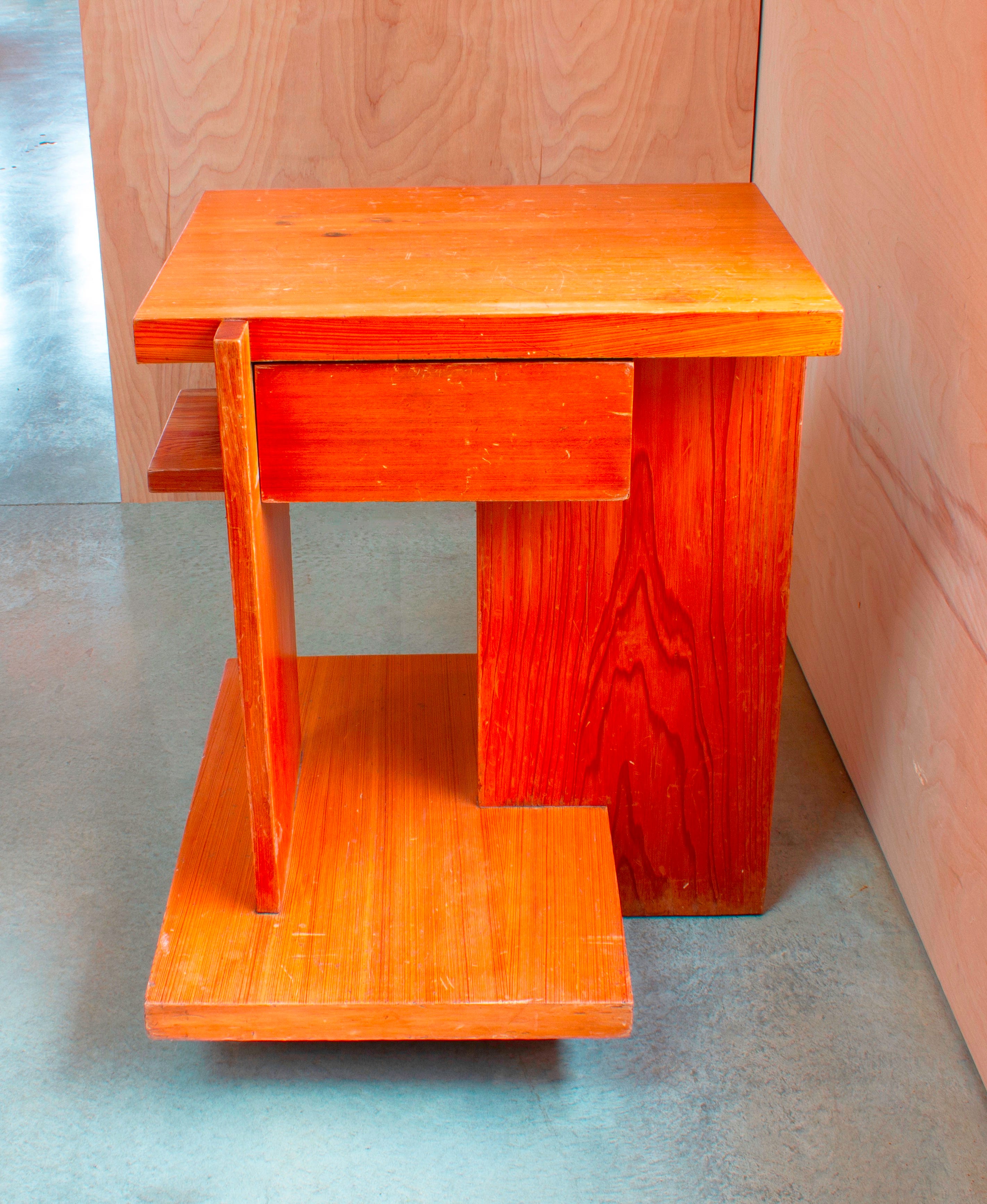
The answer: yes you can. Or rather, yes they did. As Mark says, dryly succinct, “We did the research.” In other words, they brought classic, old fashioned connoisseurship to this avowedly tricky category. They established standards, dared to declare what was genuinely the best—a rare form of rigour in a laissez-faire age.
Simple in principle. In practice, not so much.
Research, in those times, was a different beast. First off, no internet. Books then? Not many. (A handful, mostly from France and Italy, a handful of monographs on Eames, Aalto, Saarinen.) It wasn’t until Cara Greenberg’s seminal Mid-Century Modern: Furniture of the 1950s, originally published in 1984, that the term became a more widely-known collecting category. A small coterie of dealers sold 20th century work, which included Modernism. (Lillian Nassau, for whom Mark worked before starting Fifty/50 was one of these.) Auction houses selling mid-century work were rare. Similarly rare: museum curators of mid-century design.
Lacking much of the scaffolding required for serious (and thus collectible) movements, the Fifty/50 team was left to the hard slog of on-the-ground field work. Slow, rigorous, unromantic.
“None of it was a light-bulb moment. More like a dimmer.”
They persisted. “We talked to people who’d been around in the ‘50s and ‘60s and through them, we were exposed to really good things. We met a lot of the people who had been the designers and makers, visited their homes and studios. We got to look at and handle a tremendous amount over a long period of time.” Over the years, he rediscovered forgotten designers and makers, remade their careers. And he befriended some of the luminaries of that era, including—among many others—Ray Eames.
He learned from collectors too—there’d always been a small cadre of aficionados, architects and design purists who’d never stopped appreciating the work of the era. “The five or six clients I knew who were great collectors—they were so focused, doing their own research. You gain an understanding through their eyes as to what makes something good—or not.” So what becomes collectible? The early and the rare. “You want something made or manufactured close in time to the date of design. You need to know how the design or materials have changed over the years in response to manufacturing needs.” Condition is key: the holy grail is as original as possible but still in great condition.
A creative tension
Beyond pure aesthetics, the point of all this effort was rooted in something larger—and arguably more interesting. Says Mark:
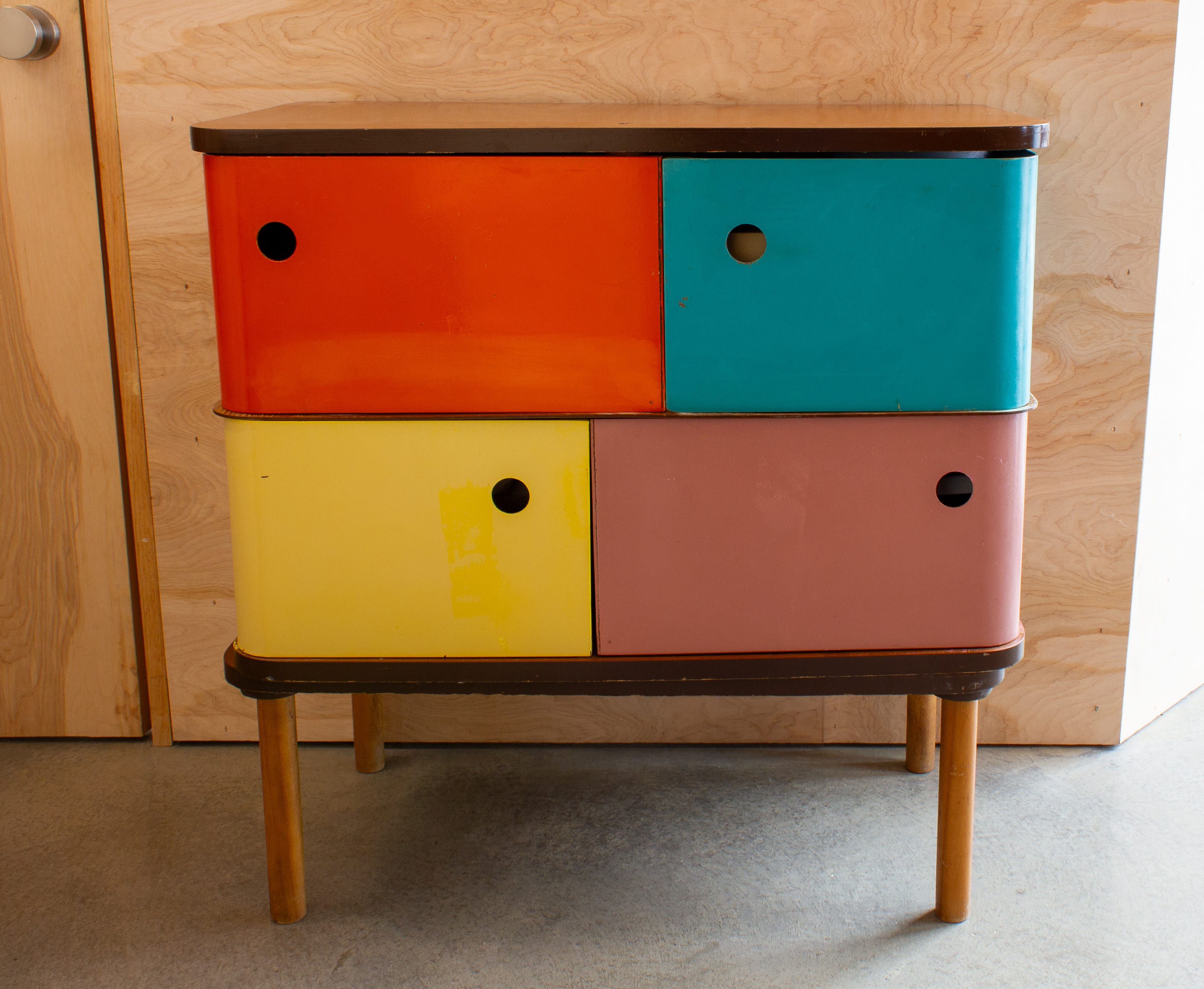
“In previous periods, design was something for the rich. Modernism changed things. The idea of getting it out there, selling more, making design affordable for the common man. That’s what’s interesting about mid-century. Post-war, there was all this design talent out there, people who were experimenting with new materials—plastics, aluminum. Plus there were all these baby boom buyers, with these homes to fill.”
Fifty/50 shuttered in 1993 after the deaths of Mark’s partners from AIDS—a loss whose shadow still lingers. Other galleries followed for Mark (notably Gansevoort Gallery). But nothing quite recaptured the headiness of those earlier years; the market they’d built made his own work harder: museums started collecting, auction houses started selling. The supply of the truly rare thinned as it inevitably must. “All the really great things are all just crazy expensive,” Mark says, shaking his head. “Out of reach of mere mortals.”
The great irony: he helped build a market that priced out the precise democratic impulse it was built to celebrate.
Modernism for the body
But there is one corner of mid-century design where that democratic heart still beats. Jewelry.
It was always part of the mix for Mark, but over the years it’s become a particular focus—and a particular cause. He now represents the estate of Art Smith (1917–1982), and is working with the National Museum of African American History and Culture (part of the Smithsonian) on a book on Smith: not a catalogue raisonné but something more ambitious—an account of the artist’s full cultural significance in addition to great photgraphs of his jewelry.
Born in Cuba to Jamaican parents, Smith was raised in New York. Black and gay in mid-century America, he became one of the leading modernist jewelers of his era—opening a studio on West 4th Street in 1949 and working there for three decades. He made wearable sculpture: biomorphic, Surrealist-influenced, attuned above all to the body. “Jewelry is a ‘what is it?’ until you relate it to the body,” Smith said. “The body is a component in design just as air and space are. Like line, form, and color, the body is a material to work with.”
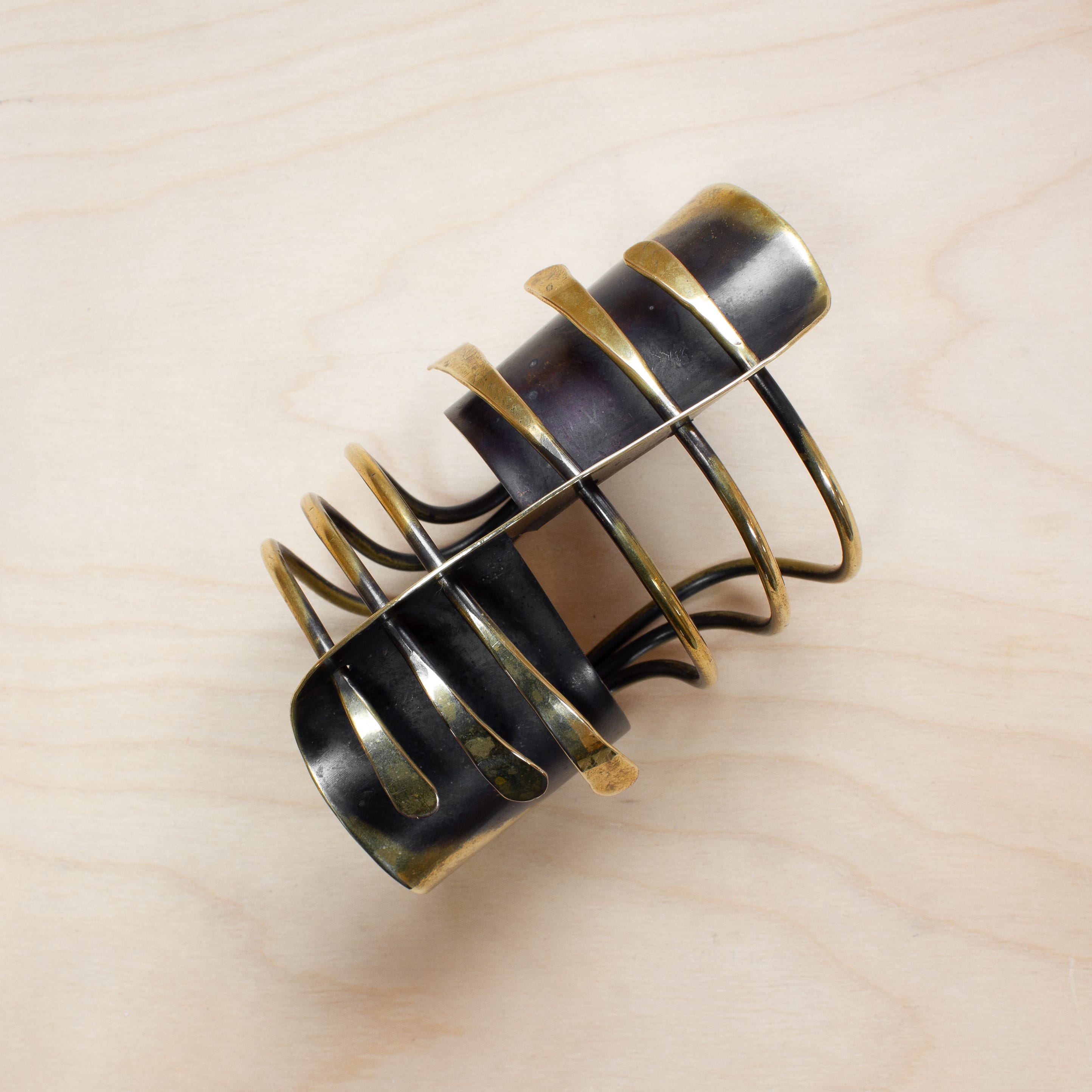
He created pieces in copper and brass so that people who couldn’t afford silver could still wear something serious. He also made cufflinks for Duke Ellington. “It’s not just about his designs,” Mark says. “There’s a serious cultural side to him too.” The words come out faster now, the enthusiasm unmistakable.
It’s a continuation of the same argument Mark has made his whole career—design belongs to everyone—just this time, more intimate.
Mark himself has a maker’s streak, which perhaps explains the affinity to the work he’s collected, championed, lived with. Father was an electrical contractor, shop in the garage. He made mobiles as a kid. “I just putz. Never got good at anything in particular. I made stuff that amused myself. I continue to do that.” There’s something almost willfully modest about this, from a man who built a market from nothing.
He lives now in Hudson, New York, in a well-chronicled house designed by Steven Holl—an architectural statement as disciplined, intellectually rigorous, and human as its owner. Filled with pieces bringing together the best in design past and present (all with Modernist roots). Past: An Eames chair. Ceramics by Leza McVey. Present: a quietly exuberant Christopher Kurtz sculpture that soars above the great room between the north and south-facing skylights. Shelf after shelf of covetable design books. All pieces he loves.
But…same as it ever was?
The challenge that Mark and his fellow dealers confronted in the ‘80s still remains: mid-century still doesn’t get the respect it deserves. Its very ubiquity and embrace by mass culture in the ‘90s and beyond (the licensed editions, the West Elm knockoffs, Dwell, Wallpaper) ended up costing it critical cred. (Because if the masses like it, it can’t be serious, right?)
So the deeper history of how the market was built—the dealers, the connoisseurs, the collectors who created it from almost nothing—has been if not ignored, then largely unrecorded. And many of the people who held that knowledge are gone, lost to AIDS before anyone thought to ask. Mark is one of the few who remain.
20th Century design expert James Zemaitis knows this well. “It’s kind of amazing: there is a new generation of young auction specialists today who have no idea who Mark and a few of his contemporaries were, or the role they played in making this whole area known and respected among a coterie of dealers, collectors and design professionals. But those of us who do know him have been blown away by his knowledge (which is encyclopedic), mentorship, generosity. He loves this space. It never would have worked without that.”
Back to the future
And then there’s the Ice Gun. Pure Mark: wit, irony, and a deep love for that specific American moment: the exuberance, the optimism, the Buck Rogers thing. Life and design, gloriously inseparable.
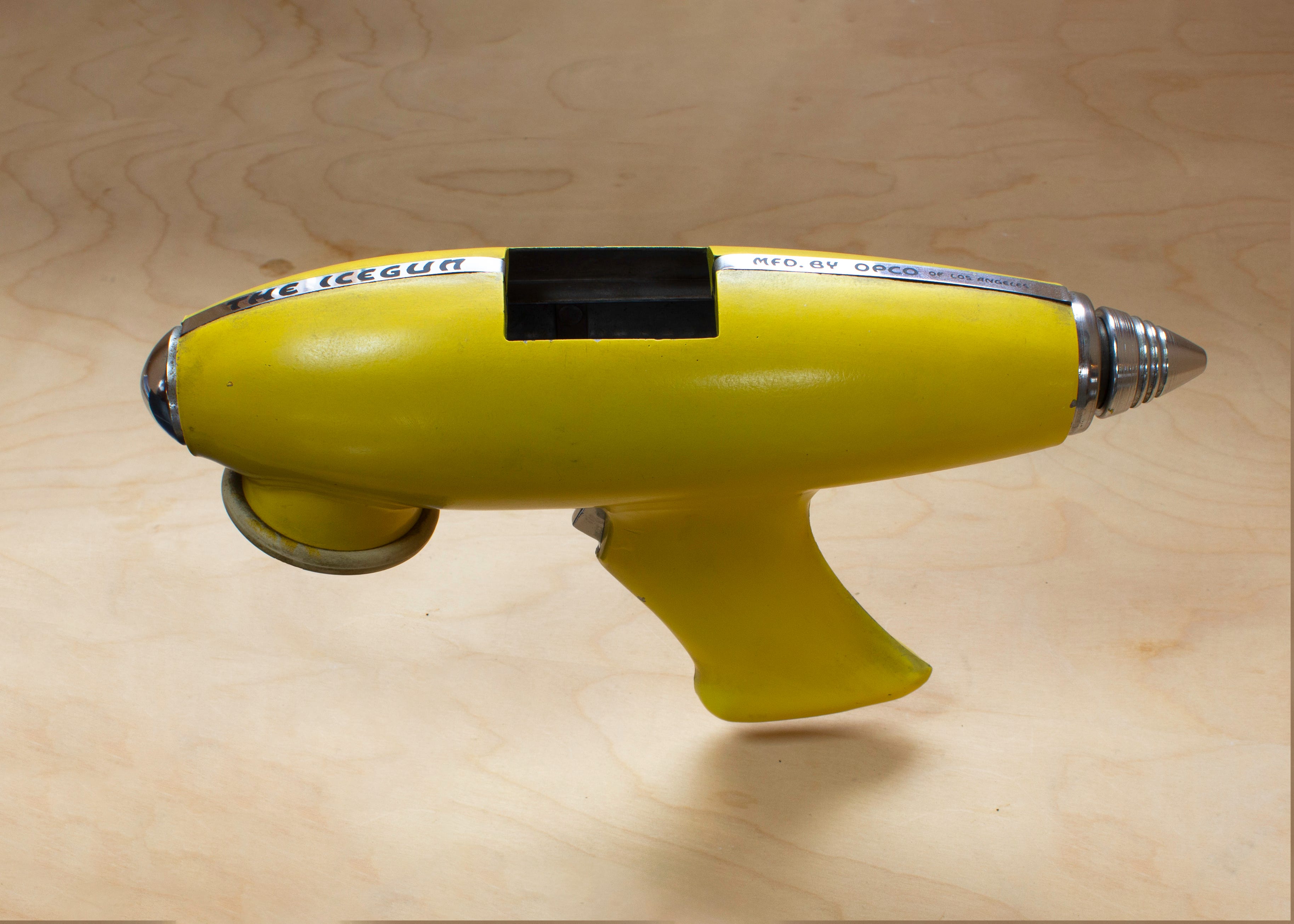
It now belongs to the Metropolitan Museum of Art: Mark has pledged it to them. Has he ever used it? “Well, I always thought it would be fun to have a party using it,” he says. “But it’s so fragile and expensive.”
The object that started as a novelty. Too good not to keep. Now too valuable to use.
There’s the whole story, right there.
Resources
Design 1935-1965: What Modern Was, Musée des Arts Decoratifs, Montreal
The Machine Age in America 1918-41
Les Années 50, Les Années 60, Anne Bony
Additionally: resources provided here.
Thanks Regina, enjoyed your take on me and Modernism, it was a fun project.
And thanks to my talented co-worked, Talula Baer, for the clear concise photos (except for the ancient portrait from 1995).
Mentor to many!